
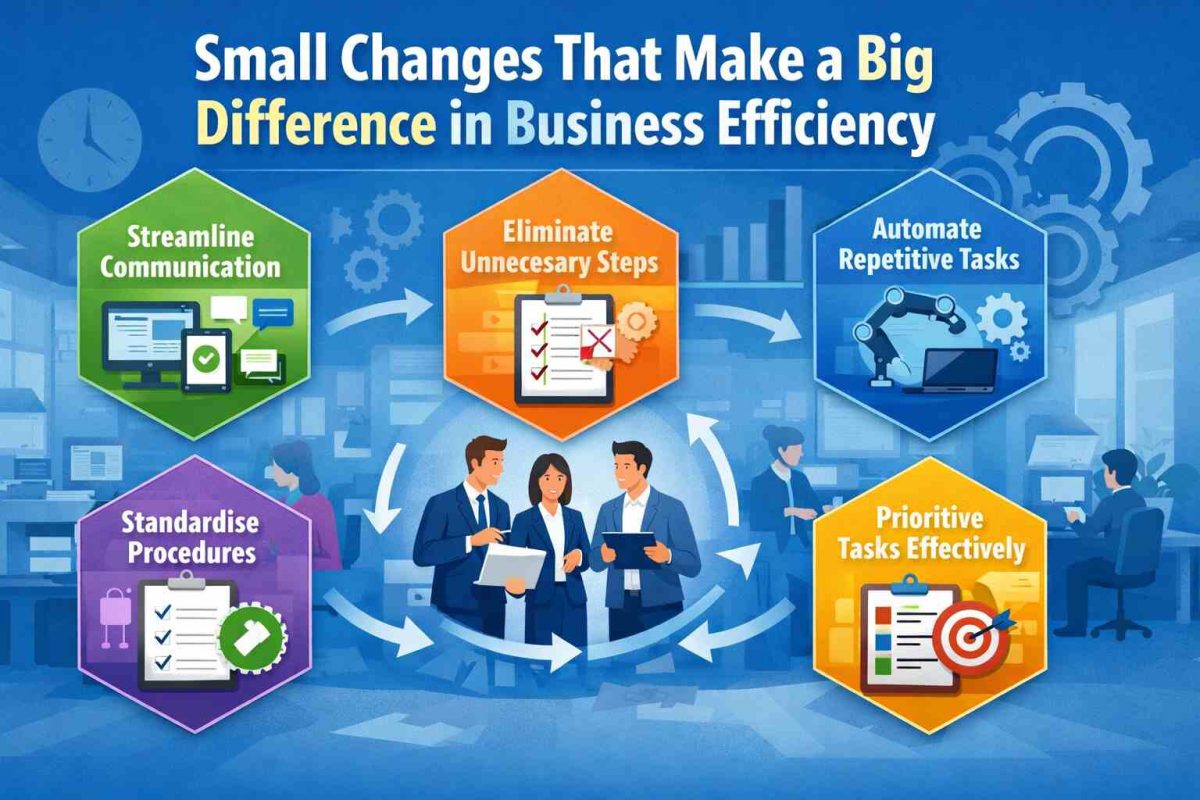
Operational efficiency is a cornerstone of any successful business organization. It is not just about cutting costs or speeding up business processes; it is about making smarter use of resources to achieve better outcomes. Large-scale transformations can be impactful, but they require a significant investment of money, time, and effort. On the other hand, small improvements are relatively easy to implement, leading to substantial gains over time. Here are a few small improvements that can drive big operational excellence.
Improvements That Can Drive Big Operational Efficiency Gains
Here you go!
Streamline the Communication Process
Miscommunication and delays often arise when your team relies on fragmented communication channels like phone calls, email, or even sticky notes. Adopting a centralized document management system helps teams access, share, and update information in real time. It reduces misunderstandings, eliminates duplicate efforts, and also ensures that everyone stays aligned. By creating dedicated channels for different projects or departments, teams can ensure that they share information efficiently and remain organized.
Eliminate Unnecessary Steps
Complex processes often include redundant steps that add no value to the outcome. Critically evaluating each step and mapping out workflows can reveal opportunities for proper capacity utilization and simplification. Simplifying operations not only saves time but also reduces costs and improves overall productivity. This elimination of unnecessary steps allows your team to focus on high-value activities that contribute directly to business growth.
Automate Repetitive Tasks
Manual tasks like invoicing, data entry, or report generation consume valuable employee productivity hours that can be spent on more strategic activities. Adoption of automation tools offers a solution to this problem by handling repetitive work with speed and precision. It reduces human errors, frees up employee time, and also enables your team to concentrate on strategic and creative work.
Standardise Procedures
Inconsistent business processes can lead to errors and inefficiencies. It ultimately hinders operational efficiency. Clearly defined workflows make it easier for employees to follow best practices and maintain quality. It can be said that by integrating enterprise information management, your organization can unify data, streamline documentation, and create a structured approach that enhances efficiency while supporting scalability and compliance requirements.
Optimize Workflow Layouts
Your employees often waste their valuable time moving between departments or accessing equipment and tools unnecessarily. Optimizing workflow layouts can address this issue by improving efficiency and reducing unnecessary movement. In physical spaces, you should keep the frequently used tools near workstations to minimize travel time. You can also arrange desks so that your team members can collaborate closely and enhance their communication and cooperation.
Prioritize Tasks Effectively
Employees often struggle to determine which tasks should take precedence. It might lead to missed deadlines and inefficiencies. To address this challenge, business organizations need to adopt prioritization frameworks that help to clarify focus areas. Clear prioritization improves time management, boosts productivity, and helps you achieve your business goals.
The beauty of small improvements typically lies in their scalability and simplicity. Each task may seem minor on its own, but collectively, they can create a snowball effect that completely transforms business operations.




Leave a Reply