
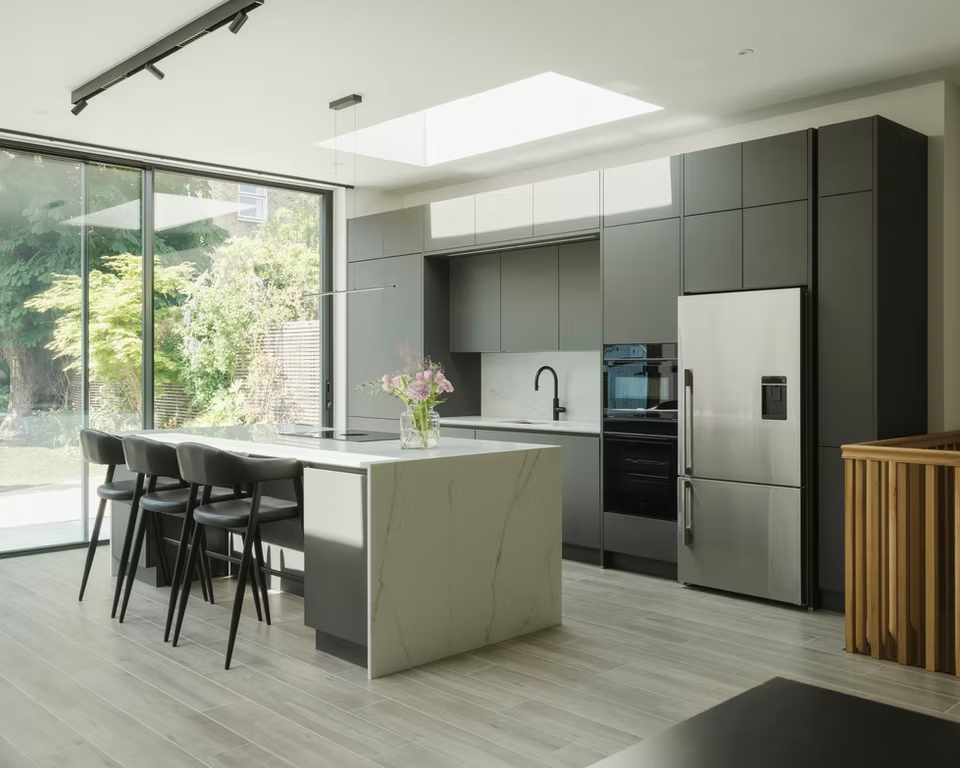
Living in London has a way of making you love your home and outgrow it at the same time. You get attached to the street, the neighbors, the rhythm of the area. Moving feels dramatic and expensive. So when space starts feeling tight, extending often feels like the smarter option. But anyone who has looked into it knows that a home extension in London is not just about adding a room. It is about navigating design choices, tight plots, and layers of planning rules that can quickly feel overwhelming. The good news is that when the process is handled thoughtfully, it can feel far more manageable than it first appears.
Most extensions begin with a simple need. A bigger kitchen. A brighter living space. A small office that is not squeezed into a corner of the bedroom. The key is understanding that the success of the project depends less on how much space you add and more on how well that space is designed. Square footage alone does not solve problems. Flow, light, and layout do.
Start With How You Actually Live
Before thinking about drawings or permissions, take a close look at your daily routines. Where does the house feel crowded. Which areas are underused. What frustrates you most on a normal weekday. These questions often reveal that the issue is not just space, but how the existing space is arranged.
Experienced Home Extension Designers will usually begin here. They focus on understanding habits before proposing solutions. That might mean rethinking connections between rooms or improving natural light rather than simply pushing walls outward. When the design responds to real life, it tends to feel effortless once built.
Respect the Character of the Property
London homes, especially period properties, have strong identities. Terraces, semis, and detached houses all come with proportions and details that give them charm. An extension that ignores that character can feel awkward, even if it looks impressive in isolation.
A good Residential Design Studio works with what is already there. They consider rooflines, window rhythms, and materials so the new space feels connected rather than stuck on. The goal is not to copy the old exactly, but to create a conversation between old and new that feels balanced.
The Reality of Planning in London
One of the biggest concerns homeowners have is simply this: How to get planning permission for a home extension in London. It is a fair question. Rules vary between boroughs, conservation areas add complexity, and neighbors have the right to comment. The process can feel like a maze if you approach it alone.
This is where knowledge and preparation matter. A Planning & Technical Design Studio typically reviews local policies early, checks whether the project falls under permitted development, and prepares clear documentation to support the application. Starting with a realistic design that aligns with local guidelines dramatically improves the chances of approval. It is less about pushing boundaries and more about understanding them.
Building Regulations Are Not Just Red Tape
Beyond planning permission, building regulations ensure that the extension is safe, energy efficient, and structurally sound. These rules cover insulation, ventilation, fire safety, drainage, and more. While they may seem technical, they directly affect how comfortable the new space will feel.
An Architectural Technologist often plays a key role here, translating design ideas into compliant technical drawings. Their input ensures that the extension does not just look good but performs well over time. Warm in winter, cool in summer, and solid underfoot.
Budget and Expectations Need Honesty
London projects can be costly, so clear budgeting is essential. Being honest about what you can invest helps shape smarter design decisions. Sometimes a smaller extension with better layout and natural light delivers more value than a larger one with compromises.
This is where experienced Domestic home extension designers prove their worth. They understand the realities of working within tight urban sites and realistic budgets. They know where savings can be made without weakening the overall vision, and where it is worth investing a little more for long term benefit.
Communication Keeps Stress Down
Extensions involve many moving parts. Designers, consultants, builders, and local authorities all have roles to play. Clear communication between everyone keeps the project steady. When decisions are explained simply and timelines are realistic, stress levels stay lower.
Studios like studio-mass tend to focus on collaboration rather than complexity. They keep the process transparent so homeowners feel involved but not overwhelmed. That balance makes a big difference, especially in a city where projects can easily feel bureaucratic.
A Home That Still Feels Like Home
At the end of the day, the goal of an extension is not just more space. It is a home that fits your life better. One that supports work, rest, and family time without constant compromise. When design, planning, and technical details are handled with care, the finished extension feels natural, almost inevitable.
If you are considering extending in London, take your time at the beginning. Ask practical questions. Seek thoughtful guidance. Focus on how you want your home to feel, not just how you want it to look. With the right approach, the process becomes less about paperwork and more about shaping a space that genuinely supports the way you live.



Leave a Reply